Tuesday, December 27, 2005

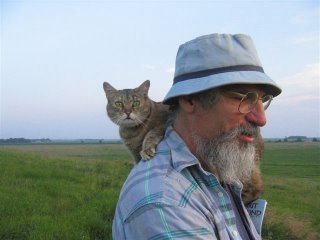
The cat who walked up spirit mound . . .

Thursday, March 01, 2001

MUSIC:
ALL POINTS UP
JEBEDIAH STONE

Volume 1, No. 8
[p 3]

Revolutionary Change in BSO [BSO=Black Student Organization,
I suppose many people don't remember that now]

After looking backward and reflecting on the past performance of the leadership of BSO
and student participation in the organization it seems most appropriate, since the BSO
elections are nearing, to raise some critical questions concerning the selection of officers
to BSO, student participation in the organization and the organization's policy output.
By no means is my intention to offend anyone. Rather it is to raise some serious questions
which in the short run will determine whether or not BSO will survive another year given the lack
of student involvement in the organization and the absence of capable leadership -- irresponsive
to student wants and desires -- which taken together has produced anonfunctional organization
and an apathetic student body.

As spelled out in the constitution, the chief policy making body of the organization is the
Consultation Assembly which votes in conjunction with the Chairman. The former consists
of 5 members elected by the body and the latter is selected by that Consultative Assembly
either from among itself or the body. Since the constitution did not lay down a format for the
election process, in last year's election, the most well known candidates out of those who were nominated got elected to office. More specifically, the election was a popularity contest which
allowed the less qualified candidates -- in terms of organization, administrative ability, and
imagination -- to win office at the expense of the more qualified and imaginative,but lesser
known candidates. Yet it is important to mention that two qualified women did assume
important positions in the leadership structure.

Now the question all this raises is should the election of officers be a popularity contest
that discriminates against freshmen graduate students and which also has a tendency
of placing the less competent candidates in office at the expense of the lesser known
but more competent candidates? My own personal view is that the election process
should not be a popularity contest, for reasons which can be discussed later. Rather
candidates seeking office should discuss with students on a personal level the
policies they deem desirable for the organization if they want that student quota.
This can be done by having a candidate for office receive 40 or more signatures
on a petition that spells out his or her policy proposals which should be discussed
with the student before the petition is signed. It is important to notethat this is just
one procedure for electing officers and does not exhaust the possibilities of alternative
methods.

The major reason for a need to avoid a duplication of last year's election is that it put
in office a group of students, not withstanding their sincerity, who lacked an imaginative
and broad perspective in formulating the organization's policies. They did not solicit the
ideas and information from the body in drawing upprograms, i.e. the leadership was closed
rather than an open system and did not create nor invite an atmosphere that encouraged
students to offer suggestions in formulating programs or to criticize existing ones. More
specifically, the leadership constituted an elitist body that did not necessarily reflect the
students' interest. What the process did reflect was the leadership's perception of what
they thought the students should have rather than what the students wanted.

As a result students did not volunteer for committees that the Leadership drew up which
caused the latter to question the body's sincerity rather than to reevaluate their programs
to the body.

Another critical question concerns student participation in the organization. Why is it that
Black students don't even attend their own organizational Meetings? The single most important
factor that explains this occurrence relates to the performance and behavior of the officers.
It has been already mentioned that the leadership was a closed system which had the effect of discouraging student participation, therefore, there is no need to elaborate further on this. Yet there
is another dimension that has added to the students' lack of involvement in the organization, namely
the personal rivalry between male members within the leadership structure which often approached physical levels. Therefore it should not be surprising to discover a crisis of confidence in leadership because all the talk of solidarity, unity and cohesion was undone by that rivalry.

The last question I would like to raise concerns the organizational policy output. What should be the
programs and projects that the BSO engages in, and, equally significant, what should be the role of the
body in helping formulate the organization's policies? Only the students themselves can answer such
questions by placing in office serious minded students who are qualified, intelligent and imaginative; who
are tolerant of other people's viewpoints; who can distinguish between what is important and what is
necessary; and, perhaps more important, who will open up the system to allow significant participation
from the students in setting up programs and formulating policies. Following are a few examples of how
students and officers can interrelate to make the organization more beneficial and resourceful. Students
could in their respective disciplines, get together and act as pressure groups to hire black faculty. Recently
Meberry Medical School conducted a survey of about 1200 black residents of Nashville. This study
revealed that 92% of those surveyed had nutritional problems, and because they did not have medical
or other health insurance to receive medical treatment they were unaware of treatment availability. Perhaps students in food, nutrition and pre-ed [?] would be interested in doing internships in hospitals located in low income areas to gain practical work experience in their disciplines.

For the students not to pull together and engage in significant discussions, workshops, seminars, and
projects concerning relevant issues, constitutes a brain drain and real loss of talent. A lot of conditions
for revolutionary changes do exist in B.S.O. by way of the coming elections. But if the opportunity is not
seized upon, then the future of B.S.O. as a functional organization remains questionable.

If the B.S.O. continues to hold elections resembling popularity contests and to elect leaders who have
been nonfunctional in constructing worthwhile policies, then the people I communicated with last spring
will be hearing from me soon concerning the Black Political Science Club, a constructive alternative.

Sidney Parker
Pol. Sci. Econ 3


Volume 1, No. 8
[p 3]
View Point

Dear People,
We wanted to inform the Ames residents of a newly formed organization in Des Moines. Gay Community
Services, primarily a service founded by gay people for gay people, but will accept anyone who is willing
to participate in a predominately gay organization. GCS is an organization with goals such as a phone
referral service, coffee house, public relations, roommate service. Within GCS a social activities group
has formed having different clubs and groups, i.e. Tennis, horseback, swimming, roller skating, volleyball,
judo, intellectual rap, rap group, music appreciation, literary, drama, entertainment, backpack, sewing,
cooking, etc. This is a new organization and all input is welcome. We have no central [phone] number as
of yet. For further information contact
Barb Chandler
227-2447
1009 28th
Meetings of GCS every Sunday - Unitarian Church, Bell and Cassidy, 4 p.m.

[p3]
Notice:

RECYCLE YOUR FREE FLOWING [! heh]

Volume 1, No. 8
[page 2]

The Week in Review:
FORD URGES SUICIDE (OF OTHERS) TO BEAT INFLATION

By Caliban

The economy is in recession, but business is brisk in many circles. The real income of Americans
continues to fall; unemployment and prices rise. Yet profits of many corporations are the highest they've
been in their history. Why doesn't Ford or the Congress stop the roller coaster? Why should they? So far, only the working people and old people on pensions are seriously hurt. There were screaming headlines when GM profits fell from $266 to $16 million for three months. But there were no headlines when the profits of U.S. Steel rose from $87 to $814 million, and Monsanto Chemical profits doubled from $55 to $106 million in the same week. Weren't these "success" stories worthy of headlines?

A farmer buys a needed Black and Decker tool at a new higher price. Does he realize that his "sacrifice"
adds to their profits which have just jumped from $33 to $41 million this quarter?

Why stop the goose from laying golden eggs if occasionally the goose is erratic and irrational? Let the
inflation continue. Let wages be transformed into profits.

Not all capitalists are doing fine, however. Many industries have also been hurt besides the auto tycoons. The president of ConAgra, a food producer based in Omaha, resigns suddenly and the firm is run by its creditor banks. The Rock Island Railroad deepens its losses from $15 to $17 million.

Recessions are a time when large companies gobble up smaller ones for a song. And when the storm
passes, the Titans of American industry have gnawed the carcasses of the smaller corporations and have scattered the debris as scrap over the countryside. Workers also suffer, even if their employer survives. Only by strikes and tough bargaining can their wages keep pace with inflation. At best, an "escalator" clause is built into their contract. But even a guaranteed annual wage does not guarantee against lay-offs,and men and women who count on overtime to fill out their salary seek second jobs and find not even one as the recession deepens.

In the East, the National Socialist (Nazi) Party lifts its head. Racism divides the people of Boston as
national leaders look on impotently. The Puerto Rican Liberation Forces explode five bombs in New
York which scare working people but harm no one. The glass windows of big business are insured
anyway.

In the West, the Teamsters undercut the modest gains of the farm workers in a sweetheart elopement with the big growers. Yet lettuce prices continue to rise.

In Cedar Rapids, Edward Sweeny is buried alive on Oct. 16 when a sewer ditch caves in. His employer,
the Pexa Construction Co., is fined $943 by the State "Labor" Commission for violating safety
regulations.

What does [Gerald] Ford do? He spends two-and-a-half hours with livestock farmers in Washington. At
the same time he guarantees cheap food to the urban industrialist in the "fight" against inflation, so that
wages can be kept down and profits up. Only the struggle between corporations limits their own greed
for higher prices and profits.

Consumer credit rates and Master Charge rise legally to 1 1/2% per month, and Ford signs a law insuring
savings deposits up to $40,000 instead of $20,000. Someone's getting jittery.

The Attorney General -- an honorable man -- threatens anti-trust suits against the dairy and sugar giants
for price-fixing and collusion. If guilty, they could be fined thousands of dollars. But on the basis of millions of dollars of profits, it is only the conscience of the ever-campgaigning 19th Century politician
which is relieved. No working person was ever helped by trust or by anti-trust laws in America.

What is the alternative to this chaotic system which tempts us with wealth and slaughters us with illusion
and lies? Laissez-faire or competitive capitalism has long been dead in America. The choice we face is
who will control the vast concentrations of capital and the multi-national corporations. The real choice is
between national socialism (Nazism), in which business controls the people, and democratic socialism, in which the people control business.

Volume 1, No. 8
[p. 2 ad:]
Ear Garbage sez...
"...vote for Tom Richards"
a paid political ad.

Volume 1, No. 8
[p 2: credits]
Free Flowing Press

Free Flowing is a non-profit monthly publication, distributed in Ames, Des Moines and Iowa City.

Free Flowing's goal is to provide news and points of view which are not normally expressed by traditional
newspapers. Free Flowing seeks to become an alternative community newspaper, serving the interests of students and working people in Iowa.

To do this, Free Flowing needs your help -- news from your part of the community, criticism, and a
helping hand to share the work.

Free Flowing is managed by a cooperative editorial staff, whose membership is open to the public.
Meetings are currently held every Saturday at 5:00 at the M.U. Commons. If you want to contribute
articles, criticism or work to Free Flowing, please come to a meeting or write to us as 217 S. Hyland,
Ames, Iowa 50010.

LABORING MASSES:

Dennis Debure
Debbie Drumm
Robert Omar Thompson
Steve Hiatt
Karin Bizland
Rick Bonte
Tom Wilson
Pat McCaughtry
Rolf Young Class
Jim DeWolfe
Jim Dubert
Karen Goetzman
Tim Jenison
Diane Schade
Jeneatte Larkin
Ron Carson
Chase Chaze
Alynne Kirkpatrick
Karl Knock
Dan Golumbiewski
Jim Prouty
Barb Goncharuk
Tom Davenport
Kathy Rothke
Jane Larkin
Mary Martin
Fred Rezazadeh
Rich Weiskopf
Kathi Marts
Gary Larsen
Susan Newcomer
Jim Charleton
Mike Dahlem
Roberto Rey


Steve -

Here are the first three pages from Vol. 1, No. 8 - unsolicited. Let me know if you want more from that particular paper and I can work on it as time permits. Everything between [ ] is of my own words/thoughts, I think. A few places the text was screwy, like a double line etc., so I "fixed" that stuff.

-dennis

_______


Free Flowing Volume 1, No. 8

[front page article]
1st National Women Health Projects Conference in Ames

The Women's Health Project will sponsor the First National Women-Controlled Health Projects Conference November 15 through November 18. The conference is intended to be four days of information sharing with each other as women health care workers and organizers across the country. All women interested in quality health care for women are invited to attend. We will discuss different organizing perspectives-clinics, education collectives and self-help groups - to see if we can agree on any long
range goals for the feminist women's health movement, perhaps leading to a national women's health coalition.

The keynote speech, "The Politics of Birth Control," will be given by Lolly Hirsch and Laura Brown. Lolly is the publisher of The Monthly Extract: An Irregular Periodical, which is the communications network of women's health groups throughout the country. She will have some choice words of the World Population Conference, from which she recently returned. Laura is the director of the Oakland Feminist Women's Health Center and was a participant in the Menstrual Regulation Conference in Honolulu.

Their speech will be at 1, Sunday November 17th, at the Collegiate Methodist Church.

Sister Irene Munoz will give a slide presentation on "The Health Care System in China" at 3:30, Sunday, November 17th, at the Collegiate Methodist Church. She is a public health nurse at the migrant workers free clinic in Muscatine and visited the People's Republic of China in 1973. All the Sunday events are free and open to the public.

Friday, Saturday and Monday's events include self-help demonstrations, medical presentations and a variety of workshops and are open to WOMEN ONLY. The workshops include birth control methods and counseling, midwifery, office organization, legal self-help, lesbians and health care, para-medical skills, community relations, education, and pressuring institutions, publishing women's health care, and starting your own clin(ic.)

The registration fee is $20 for women's health groups and $5 for individual women. Four meals will be provided. Child care will be at the Ames Cooperative Day Care Center. We will also arrange housing for out-of-town women. If you would be willing to house a conference participant call Holly Burkhalter at 232-2949. If you would like to volunteer for child care (we would prefer non-parents and non-women) call the Women's Coalition office 294-8437 and leave your name and phone number. A conference
organizer will contact you. Registration forms and brochures listing the [line missing] (ava)ilable in the Women's Coalition office, room 65 Memorial Union. Questions in general can be directed to Jill Beattie at 232-9048

--Ann Hammon


Volume 1, No. 8

[front page article]
Third World Caucus
New Organization Formed at ISU

Several weeks ago a group of foreign and U.S. students met and formed the Third World Caucus. The organization formed after a panel discussion on the Chilean counter-revolution revealed a need for a vehicle through which foreign students could meet with American students and discuss the problems facing their homelands.

The goal of the Caucus according to its president Farhad Rezazadeh (Iran) is to educate the local community on the problems facing the Third World nations and the U.S.'s relation to these problems. Membership in the organization is open to any member of the Ames community.

The groups' first activity was a highly successful panel discussion on Imperialism and the Third World. Among the speakers were students from Turkey, Ethiopia, and Iran and members of the ISO (Steve - ?, maybe ISU or maybe it's the International Student Organization, if such an org existed) faculty. The U.S.'s support of reactionary regimes in Iran and Ethiopia and economic
exploitation by U.S. corporations drew heavy criticism at the event.

In the future the group plans to sponsor other panel discussions such as a forum on the role of women in the Third World with speakers from the Ethiopian and Iranian women's caucus. A Third World film festival is also in the works with films on the Liberation movements in Africa, the Middle East, Asia, and Latin America. People interested in working with or joining the Third World Caucus are urged to call 292-2875 or 292-4307.

Thursday, February 22, 2001


Well, I've been in the attic, but I still haven't been able to locate my copy of a copy of the first issue.

Vol. 1 No. 2 February 1, 1974 includes the following article:

Just Another Concert?
By Dennis Strand

Let's assume-at least for the length of this article-that the Jan. 6 evening of music at the Union was not just another concert. That assumption seems to indicate it was something unique as far as concerts go-and indeed it was. For one thing Rural, Sweet Nothin', Dave Plaehn &the Jug Band and All Points Up have never gigged together before and if that isn't enough-they all did it as a freebie for you who read this paper so this paper can come to you in its ever-improving form.

But the concert in its truest form goes beyond a presentation of music to a community cultural event. You heard right, an Ames Community cultural event. Those people on stage that night were Ames people, the technicians were Ames people, the 500 pairs of ears belonged to Ames people, the organizers of the concert (this paper) are Ames people and because we and our friends who couldn't make it that night all live together in this corner of the (sort??) of flat country: WE ARE A COMMUNITY. It doesn't matter whether our interactions are merely seeing each other on the street or singing or boogying together or making deals or working together or whatever we are into, we all share the common knowledge of how to live in Ames. And because of the nature of our lifestyle and activities, we (??) all share (??) in values which keep us in tune with each other.

So what. It's no big thing because nobody is going to ask for your membership card, but remember one thing--community serves its people because of the people serving the community

Other articles in this issue included:

Boycott Conflict Not Settled by Roberto Rey
ROCK and POP on the move by Irv Canfield
BAN the CAN
Revolutionary Theory by Comet
Unity and Practice by Jim Carlton
Human sexuality films (schedule)
Tuition Increases?
Growing Up an Only Faggot by Dennis Brumm
Rape Crisis Center Now in Operation by Pam Metzler
Ames Needs an Alternative Health Care System by Patty Pasons
hard*sell epidemic
Father Thinks He Knows Best by Dan Koestner
Luce criticizes US &Saigon
IMPEACHMENT!
eyes closed in the sun
Catacombs, the People's Coffeehouse
ISPIRG Consumer Protection Service
Environmental Action recycling
Obituary -- ISU Recycling Center died this fall--
murdered by a new football stadium
for lettuce boycotters (recipies)
war continues
meditations on consciousness by Carol Myhre
Fresh Fruit schedule of produce delivery at local groceries
Provided by ISPIRG Consumer Protection Service
Health Care-- An Alternative by Holly Burkhalter
journeys by demain
Phoenix Party Platform and GSB candidates
Checking Account Rates n Ames
People's Resource Center
Gay sickies no more! by Dennis Brumm
The Daily and Politics - an editorial
United Native American Student Association
Fantasia Photo
D.C. Plagued by Mediocrity by Mark Stevens
The Philosopher's Stone by Kevin Larson
IMPEACHMENT -- Do It Now!
Community Events Calendar
Wants Ads -Including
For sale"Don't Blame Me, I Voted for McGovern" bumpersticker,
Plus over 300 McGovern buttons. Joyce Harrel Vermillion, SD

POETRY by:
Ruth Van Antwerp
Tom Knudson
greg menard
Arthur Blackcloud
Lou Cardin
Kevin Larson
Alan Bell

ADS from
Audio Labs
Third World Waterbed
The Leather Shed
General Store
Dugans

Thursday, February 15, 2001

Joseph Trimbach, head of the Minneapolis division of the FBI, became the first agent in the trial to acknowledge the existence of co-intelpro, a counterintelligence program designed to target a group, and then excite local law enforcement agencies into overreacting and destroying the group. However, he denied that it was ever used on the reservation. He admitted that Coler and Williams had maps of "bunkers" on the reservation, and that when examined closed, the "bunkers" turned out to be root cellars built because of the lack of refrigeration or electricity in the houses.

The man himself, FBI Director Clarence Kelley, had to be threatened with contempt of court by Judge Edward McManus before he appeared a day late. Kelley stonewalled it throughout Kunstler's grilling, claiming ignorance on most questions. Actor Marlon Brando and comedian Dick Gregory, in the courtroom that day, commented afterward that they were "appalled" at how little Kelley know aabout his organization.

Kelley did admit the co-intl-pro had used fraudulent alerts to alarm law enforcement agencies against a group. Kunstler introduced into evidence a teletype taken from FBI machines just before the Bi-Centennial Fourth. It said, inpart, that AIM "dog soldiers" were planning to assasinate the governor of South Dakota, blow up the courthouse, snipe at torists, and hide weapons in the home of Charlie Abourezk, son of South Dakota Senator James Abourezk. All of this and more, according to the release, "to blow out the candles on America's birthday cake." Kelley said he know of noinformation to indicate whether any on the allegations were checked out.

Former chairman of the Senate Intelligence Committee Frank Church was insulted at being subpoenaed on the eve of the Democratic National Convention, but appeared in order to avoid being called during the convention. He re-stated the Committee's findings that while the name co-intel-pro had been abandoned in 1973, the principle had not.

Finally, former "goon" and BIA policeman Marvin Stoldt took the stand for the defense saying he knew Coler and Williams to be "arrogant and very abusive" and said he knew there would be trouble when the agents went onto the reservation. Stoldt called it "foolish" and added that a BIA SWAT team practicing five miles away was to have been the agent's back-up.

The day after the jury began sequestered deliberations, the Iowa state ombudsman's office released a report saying Linn County Deputy Donald Wharton had used excessive force in fingerprinting Bob Robideau on May 7th. The report said Wharton hit Bob with his fist, kneed him in the groin, twisted him to the floor, and banged his head on the concrete, opening a wound requiring five stitches. Citizen's aide Thomas Mayer said there was no evidence Bob resisted. Medical attention was denied until a U.S. Marshall arrived nearly an hour later.

Prosecution attorney Even Hultman, called to the Attorney General's office in Washington during deliberations, returned five days later, just in time to hear the verdicts: "Not guilty" on all counts.

We got a fair jury here," said Kunstler, "but not a fair trial because the only fair trial would've been no trial at all. There was a total lack on believeable evidence to even indict these defendabts."

(Name Withheld)

The U.S. government's case, from the beginning, was as shot through with holes as the Native Americans' homes destroyed in a hail of fire. Bob and Dino were on trial, in their own words, "because of our strong belief in the traditional Indian way of life, and our membership in the American Indian Movement."

The government, by indirect order of U.S. Attorney General Edward Levi, called on two Indians who took part in the shootout. Norman Brown was 15 years old at the time, and Wilford Draper was 18. Both said Bob and Dino were 600 yards away when the shooting broke out. They assumed it was the "goon squad" when they saw unmarked cars surrounding their settlement.

Coler and Williams aired their first call for help over FBI frequencies at 11:54 a.m. The time of death was established as 12 noon from gunshots at point-blank range. Brown and Draper never saw Bob or Dino closer than 200 years to the agents. Coler was an FBI SWAT team member armed with an M-16 rifle, .357 magnum pistol, and a .308 pump shotgun. Just how anyone, let alone the defendants 600 yards away, could get that close to the agents in 6 minutes was unclear.

Under Kunstler's cross-examination, Draper admitted lying to the grand jury which indicted Dino and Bob. Draper said the FBI had picked him up on a beer violation, tied him to a chair, and threatened him with first-degree murder if he refused to talk about the shootout. They denied him benefit of counsel, but promised him a new indentity if he testified.

Brown, the 15-year-old, said he too was threatened with a charge leading to life in prison.

The prosecution's Great White Hope was the oft-used "jailhouse witness". James Harper, convicted of auto theft, robbery, grand larceny, assault, burglary, forgery, and escape, told the all-white jury the Dino had confessed to him in the Linn County jail. Harper called a Cedar Rapids missionary several days after testifying, telling her that he had a federal matter to take care of before returning to his family in Florida, a free man.

The missionary, Mrs. Thelma Hess, called defense attorneys at 8 o'clock the next morning and took the witness stand at 10:30. She told how Harper had studied Butler's case even taking South Dakota newspapers as supplements to local media coverage of the case. She said Harper threatened her with death if she revealed their conversation.

Jury foreman Robert Bolin said afterwards that no one member of the jury believed Harper's testimony, but actually felt sorry for prosecutor Evan Hultman "because the FBI sent him such a lousy witness."

Except for hundreds of spent shell casings, and one fingerprint from Bob, found on one of the agent's cars-that was the sum and substance of the government's case.

Rather than rest their case without calling a witness, William Kunstler and the Wounded Knee Legal Defense-Offense Committee mounted an attack on the FBI.

Kunstler demanded the government explain how the largest investigation and manhunt in the history of the FBI contained not one single report or investigation on the death of Indian Joseph Stuntz, found with a bullet through the forehead. They could not.

AIM leader John Trudell was called for the defense. But his testimony was inexplicably cut short as he was about to explain how Annie May Aquash, the woman who could've cleared Bob and Dino, was picked up by the FBI. She was found dead a few days later. The official FBI autopsy said she died of exposure. When attorneys forced the FBI to reveal where she was buried, a second autopsy showed a bullet in the back of her head had killed her.

free flowing
vol. 3 no.6 July 1976

On June 25, 1975, FBI agents Jack Coler and Ronald Williams walked into a situation so hostile that it would not only result in their deaths, but in the death of an American Indian and the destruction of innocent Native Americans' homes as well. All of the people involved in the investigation agreed that the shootout on the Pine Ridge Reservation near Ogallala, South Dakota was "a tragic accident of fate."

The Pine Ridge Reservation, by any traditional definition, cannot be called a "civilized" place. A scant 8000 residents are scattered over its 4000 square miles. Three or four hundred have telephones, few have electricity, fewer still have sewers or running water. Unemployment hold at a steady 75%.

The Bureau of Indian Affairs, a branch of the federal government, is the only form of law enforcement. The BIA's traditional role has been to control the reservation's economy and to quash any disturbances that might result in a cut in government aid. The latter job has led to much violence since the 1973 occupation of Wounded Knee; and the ouster of former tribal president Dick Wilson. 273 Indians have died violent deaths on the reservation in the last three years. Few have been solved, most have never been investigated.

During his reign, Wilson and his "goon squad" managed to pirate hundreds of thousands of government dollars meant for the Ogallala Sioux tribe. After his overthrow, Wilson and the "goons" vowed to wipe out the entire American Indian Movement. A number of "goons" have been given a license to kill by putting on BIA police uniforms. They know who the AIM members are. If a crime victim happens to be an AIM member, his or her call for help falls on deaf ears.

Vine Deloria, Iowa State University graduate and author of Custer Died for Your Sins, was born and raised on Pine Ridge Reservation. Even as a child, Deloria recalls, he and his minister father had to stop and identify themselves before proceeding within one hundred yards of a residence on the reservation. Unidentified visitors were shot before they could get close enough to be recognized by sight.

FBI agents Coler and Williams drove onto the reservation in two unmarked cars, unannounced, to serve an arrest warrant. They were shot to death more than two hundred yards from a cluster of houses.

On June 7, 1996, AIM members Darrelle (Dino) Butler and Robert Robideau went on trial in Cedar Rapids, Iowa, Federal Court, charged with two counts of first degree murder each. At least 15 terrified Native Americans held off more than one hundred law enforcement agents on the day of the shootout, believing they were under attack from the "goons". But because the rest were under the age of 20, these two, and two others awaiting trial, were pegged by the FBI to be the "leaders" of a conspiracy to ambush and kill the two agents.

The trial that followed was, in the words of activist defense attorney William Kunstler, "an historic trial at an historic time." An Indian conspiracy was never proven; an FBI conspiracy was.
(to be continued)